
Students' Obligations Guide
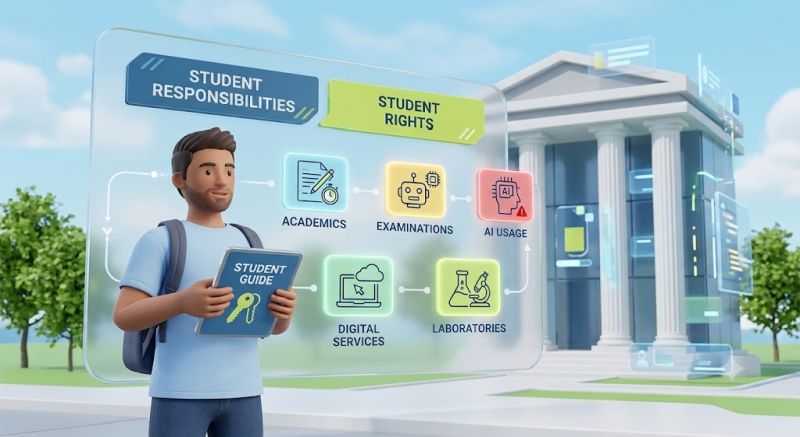
Select a category below to review the specific academic, behavioral, and technological obligations of IDS students.
Academic & Tuition Obligations
Systematic Attendance: Students must attend lectures, labs, and thesis meetings regularly. A minimum of 8 out of 13 weeks of attendance is mandatory for lectures/tutorials, while only one (1) justified absence is allowed in laboratory sessions, which must be made up before the semester ends.
Coursework Submission: All assignments, projects, and assessment requirements must be submitted on time, strictly adhering to the academic schedule of the Program.
Tuition Fees: Prescribed tuition fees must be paid annually prior to the start date of each new academic year.
BSc Thesis Cooperation: Continuous and active collaboration with the supervising professor and members of the Steering Committee is required throughout the preparation and completion of the undergraduate thesis.
Quality Assurance: Active participation in quality assurance processes, such as completing internal course evaluation questionnaires, is required to help continuously improve the educational experience.
Exams, Regulations & Academic Integrity
Exam Code of Conduct: Students must strictly follow all examination and evaluation rules. Compliance with invigilators' instructions is mandatory. Any form of cheating, unauthorized collaboration, or use of non-permitted technical devices is strictly prohibited, including electronic proctoring procedures.
Regulatory Compliance: Students must fully respect and adhere to the Internal Rules of Operation, the undergraduate studies regulations, and all official decisions made by the University of the Peloponnese organs.
Plagiarism & Ethics: Demonstrating academic integrity is absolute. Any form of plagiarism or unethical behavior is forbidden, and students must comply fully with the University's Anti-Plagiarism Policy and Code of Ethics.
Authenticity of Documents: Students bear full responsibility for the accuracy and authenticity of all documents submitted to the University. Forgery, concealment, or false statements constitute serious misconduct subject to disciplinary actions.
Ethical Use of Artificial Intelligence (AI) Tools
Preserving Originality: AI tools must be used in a way that does not violate academic integrity nor substitute the student's own work, judgment, and critical creativity.
General Exam Ban: The use of AI is strictly prohibited during exams, in assignments, or any evaluated project, unless explicitly permitted by the instructor according to specific course guidelines.
Mandatory Disclosure: Students must explicitly and accurately declare any use of AI tools in assignments, theses, or other academic activities, following the documentation and transparency standards set by the instructor.
Prohibited Code/Report Generation: Generating code, reports, or data via AI is banned when it contradicts learning objectives or distorts the true evaluation of student skills. Improper AI use is treated as academic misconduct or plagiarism.
Data Confidentiality: Personal data, third-party data, and University educational materials must be protected and never input into external AI systems, avoiding risks regarding confidentiality or intellectual property leaks.
Critical Awareness: Responsible, critical, and ethical use of AI is expected, along with understanding its limitations, biases, and risks within the digital and computer sciences domain.
Digital Services & Information Systems
Data Accuracy & Updates: Students must promptly inform the Secretariat and faculty members about issues affecting their progress and ensure their personal data remains accurate in the central portal.
Communication Channels: Regularly monitoring the official institutional email, news updates, and the official IDS portal is mandatory.
Cybersecurity Measures: Institutional accounts, cloud services, and e-learning platforms must be used responsibly. Students are required to take cybersecurity measures, such as protecting their passwords and avoiding unauthorized data sharing.
Laboratory Rules & Campus Conduct
Community Respect: Students must respect the academic environment, develop a collaborative attitude, foster mutual understanding, and maintain the smooth operation of the University community.
Laboratory Safety Rules: Lab safety regulations and equipment guidelines must be followed consistently. Equipment should strictly be used for curriculum activities. Dangerous or unauthorized modifications to machinery or networks are banned, and any damages must be reported immediately.
Professional Behavior & Inclusivity: Students must contribute to a safe, inclusive, and multicultural environment, avoiding any form of discrimination or harassment. Professional behavior is required across all physical and digital campus interactions.